

ESA’s Euclid space telescope, built to map billions of galaxies, has spotted a previously unknown comet in images taken between 16 and 24 September 2026. The object, now designated C/2026 S1 (Euclid), is the first new comet the mission has found.
A discovery from a telescope not built for it
Euclid’s job is to take deep, steady images of distant galaxies and reveal the influence of dark matter and dark energy, not to follow fast-moving objects in the Solar System. It had detected comets before, but only ones that were already known, according to the ESA announcement. The new find is therefore a notable result for a mission with a very different focus.
How the comet was found
Mikko Pöntinen, a PhD student at the University of Helsinki, made the initial discovery together with the Solar System Objects Science Working Group of the Euclid Consortium. He used moving-object detection software he developed to monitor small Solar System bodies in Euclid’s data. The software flagged a streak smeared across several images, the signature of a fast-moving object.
By predicting the object’s position, Pöntinen located it in five image sets, in total 16 exposures, in the Euclid Deep Field North. A fuzzy cloud around it suggested an active body shedding dust and gas, as a comet does.
From alert to confirmation
Checks against catalogues of known comets and asteroids found no match. Pöntinen reported the observations to the International Astronomical Union’s Minor Planet Center, which alerted ground-based astronomers to contribute follow-up observations. The center published the report and confirmed the object as a comet on 8 October.
A distant visitor on a long orbit
The comet lies about 1.3 billion kilometres from Earth, roughly between the orbits of Jupiter and Saturn. It is not in the plane of the planets. Seen from the Sun, it is currently almost straight up, on an orbit that arches over the Solar System and will take thousands of years to complete. The orbital period will be refined as more data arrive.
Why it was a lucky catch
Euclid deliberately avoids the band of sky along the Solar System’s plane, where dust glare would hinder sensitive deep-sky imaging. That band is also where most comets and asteroids are found. The telescope’s step-and-stare strategy typically visits each patch of sky only once, so it cannot return on demand to check a suspect. Bruno Altieri, Euclid’s archive scientist, said very few discoveries were expected, and called the capture a happy coincidence of the comet’s orbit and the scanning schedule.
Tracking such objects still matters for the main mission. Moving trails and extra light must be identified and removed so they do not contaminate the precision galaxy maps.
A test run for Comet Interceptor
The quick turnaround from identification to validation suggests Euclid can detect new comets while they are still relatively far from the Sun. That could eventually help find a target for ESA’s future Comet Interceptor mission. C/2026 S1 is not a suitable candidate for it, but Euclid Project Scientist Valeria Pettorino said the process gives both mission teams a real test case for future coordination.
Why comets matter
Comets are icy, dusty leftovers from the birth of the Solar System about 4.6 billion years ago, mostly from the Kuiper Belt and Oort Cloud. Because they have changed little since, studying them offers clues to the raw ingredients that shaped the planets, including where Earth’s water and the building blocks of life may have come from.
Source: ESA, “Euclid discovers new comet”, 19 October 2026
Transparency Note: This article was prepared with the assistance of artificial intelligence technologies. Every piece is thoroughly reviewed and verified by our editorial team, who retain full responsibility for the final content.
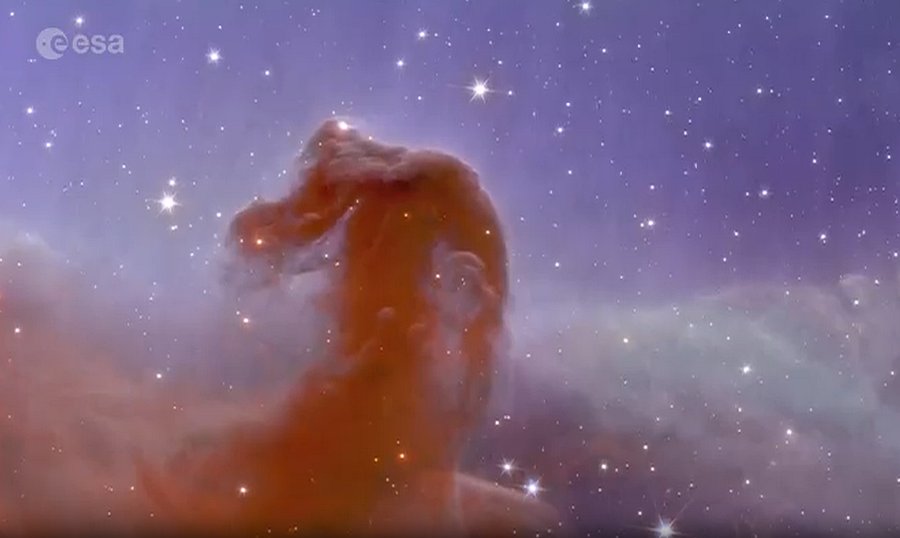
Picture: ESA, Euclid