

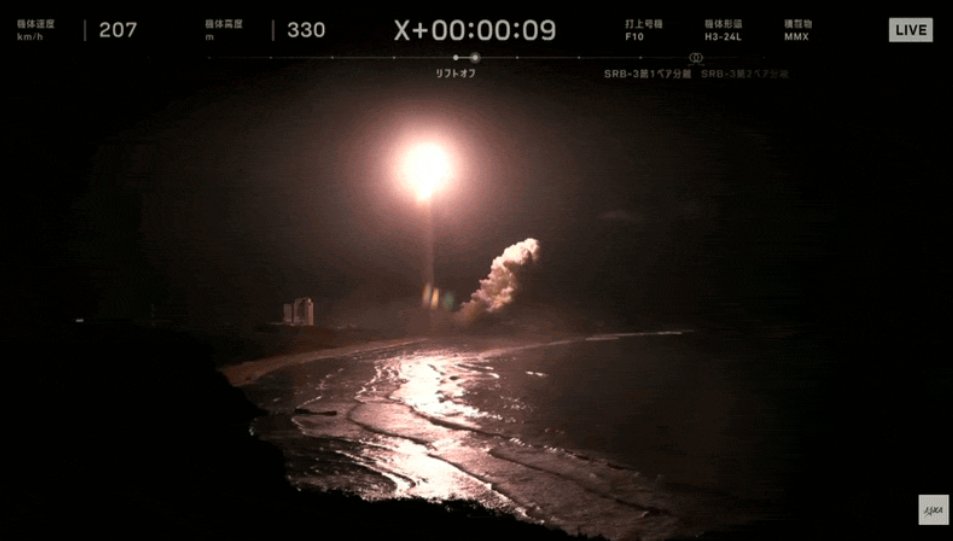
Japan’s MMX probe left Earth on 20 October bound for Mars’s moon Phobos, chasing a sample no one has ever brought home. For scientists, it is a hunt for the moons’ origins. For investors, it is a live stress test of Japan’s H3 rocket and its push to build a commercial space industry.
A 10-gram prize
The Martian Moons eXploration (MMX) spacecraft rode an H3 rocket from Tanegashima Space Center at 04:41 Japan time on 20 October, according to ESA. It should reach Mars in August 2027 and spend about three years studying Phobos and Deimos. It will then attempt two landings on Phobos to gather at least 10 grams of material, due back on Earth around 2031. No mission has ever returned samples from the Martian system; Russia’s Phobos-Grunt never left Earth orbit in 2011. The grains could settle whether the moons are captured asteroids or debris from a giant impact.
The rocket is the real story
The sample is the scientific prize, but commercially the rocket matters more. This was the H3’s tenth flight and its first interplanetary mission, and Sky & Telescope reports that the launch went flawlessly. MMX was originally planned for 2024 but slipped after H3’s failed debut in 2023. Earth–Mars launch windows open only about every 26 months, so the delay was costly. Co-developed by JAXA and Mitsubishi Heavy Industries (MHI), H3 is Japan’s answer to a launch market dominated by SpaceX’s reusable Falcon 9.
Why markets are paying attention
A clean deep-space launch adds to a growing reliability record. Japanese reports say H3 has now flown three successful missions in a row since its eighth flight failed. That matters because Tokyo is backing the sector heavily, with a ¥1 trillion ten-year fund channelled through JAXA. The government aims to double Japan’s domestic space market to about ¥8 trillion by the early 2030s. JAXA is also shifting launch operations toward industry. One investor-focused analysis argues that H3’s flight rate and reliability therefore feed directly into MHI’s space business, with ripple effects for satellite makers and ground infrastructure.
The risks
Space remains a binary business. MMX still faces roughly five years of demanding operations, including touchdowns on a 22-kilometre moon with almost no gravity. A failure would dent sentiment across the sector. MHI is also a sprawling industrial group, and a single launch rarely moves its earnings. Space is one strand of a business that also spans defence and energy.
What to watch next
The key dates are Mars arrival in August 2027 and the deployment of the French-German IDEFIX rover around late 2028 or early 2029. Investors should also follow further H3 launches, including commercial missions such as ispace’s lunar lander. Each is a data point on whether Japan can turn scientific prestige into a durable launch business. This article is for information only and is not investment advice.
Transparency Note: This article was prepared with the assistance of artificial intelligence technologies. Every piece is thoroughly reviewed and verified by our editorial team, who retain full responsibility for the final content.
Picture: JAXA